


The French Revolution: Liberty Devours Its Children: Prologue Part 2
- Dr. Nathan T. Morton

- Dec 17, 2025
- 15 min read
Updated: Dec 18, 2025
The French Revolution: Liberty Devours Its Children
1) Hope, then fracture (1789–1792)
At the start, the French Revolution did not look like a blood-soaked upheaval. It looked more like a last-ditch attempt to repair a broken kingdom.
· Estates-General & the birth of the National Assembly (1789)
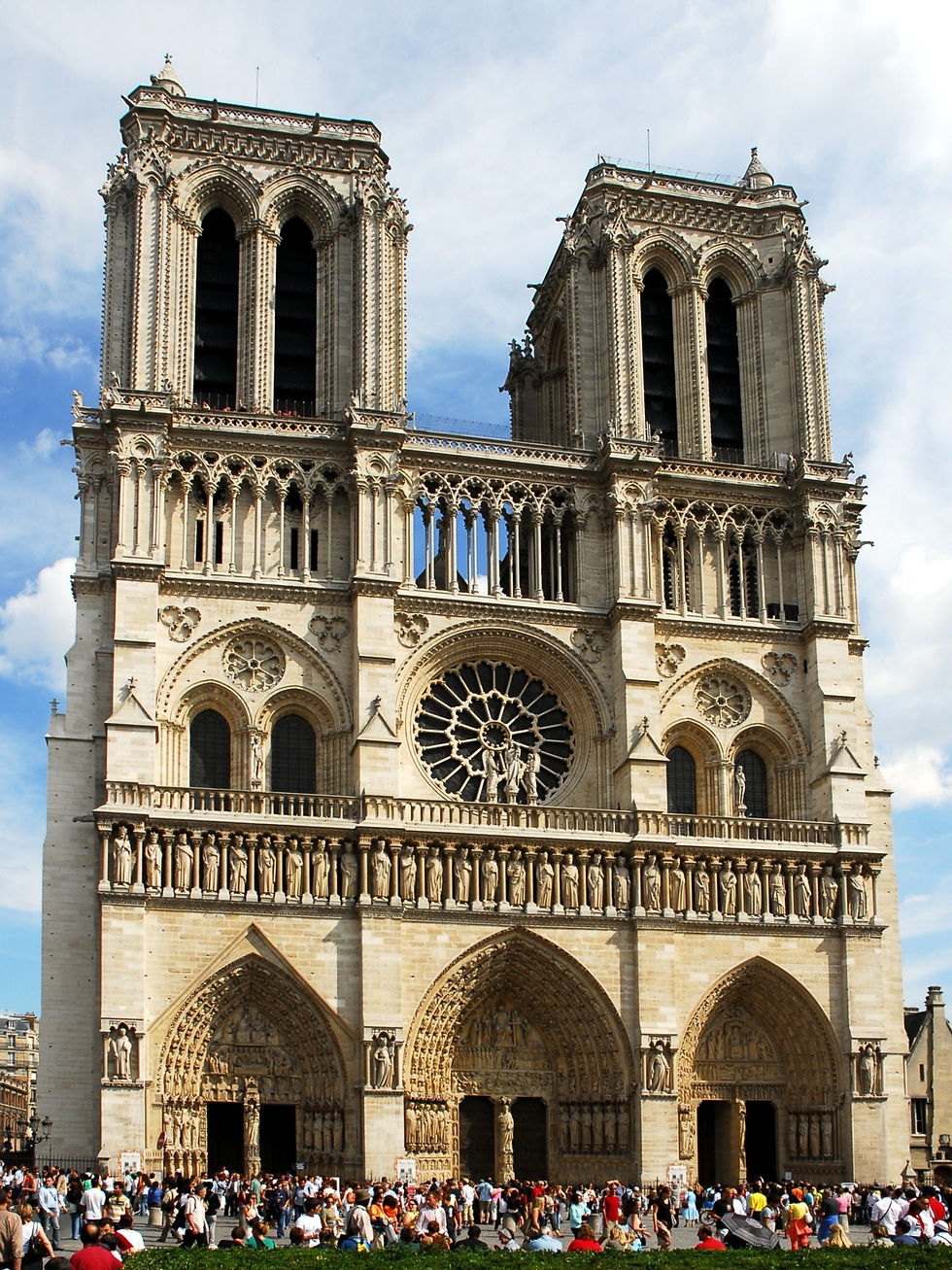
France was in a deep financial crisis by 1789. After decades of war and royal extravagance, the nation’s broken tax system was teetering on the edge of bankruptcy. With no easy way out, King Louis XVI did something no French king had done since 1614: he called the Estates-General, a representative assembly made up of three “estates” of society: the First Estate (clergy), the Second Estate (nobility), and the Third Estate (everyone else: commoners, professionals, merchants, peasants).
The hope was that this assembly could steady the kingdom by authorizing new taxes, trimming spending, and pushing through long-delayed reforms. Almost immediately, however, the discussion shifted from money to legitimacy: who exactly had the right to speak for France? Was it the king and the traditional estates voting as separate orders or did the true authority rest with the population as a whole?
The Third Estate, which represented the vast majority, was tired of being politically sidelined. Under the traditional rules, each estate had one vote, which meant the clergy and nobility could outvote the Third Estate 2 to 1, even though the Third represented most of the population.
When it became clear the old voting system favored the privileged, the representatives of the Third Estate broke away declaring themselves to be the National Assembly, and that they alone spoke for the nation.
This was a pivotal moment as power began to shift away from the king and toward a representative body. Soon after, the Assembly began drafting a new political order grounded in universal principles rather than hereditary privilege.
· The Declaration of the Rights of Man and of the Citizen (August 1789)
In August 1789, the National Assembly adopted the Declaration of the Rights of Man and of the Citizen, thereby taking a decisive step to give the Revolution a clear moral and political foundation. This short but powerful document sought to define the basic rights of all people and to set firm limits on governmental authority. It was influenced by several factors: Enlightenment thinkers such as Rousseau and Montesquieu, the broader tradition of natural rights, and the recent example of the American Revolution.
The Declaration announced several sweeping principles:
All men are born free and equal in rights. This did not mean everyone was equal in wealth or ability, but that no one was born with the right to rule others simply by blood or title. Nobles and commoners were, in principle, equal before the law.
Sovereignty rests with the nation, not the king. Power no longer flowed from the crown downward as a gift of God. Instead, it flowed upward from the people. The nation itself became the true source of political authority.
Certain rights are natural and cannot be taken away. The Declaration highlighted rights such as liberty, property, security, and resistance to oppression. Government existed to protect these rights, not to hand them out as favors.
Law must express the “general will” and apply equally to all. Laws were to reflect the common good, not the interests of a privileged few. They were to be the same for rich and poor, noble and peasant, clergy and layperson. No one was to be above the law.
For many in France in 1789, this moment felt like the high point of revolutionary hope. They pictured a constitutional monarchy in which the king would still exist, but his power would be limited by a written constitution and bylaws passed by elected representatives. In this vision, France would keep a king, a Church, and many of its traditions, but they would operate within a framework of rights, equality before the law, and popular sovereignty.
For a brief moment, France seemed to have found a path to modernization without tearing down the entire old order—a way to move from absolute monarchy to a more just, rational, representative government without descending into chaos. The tragedy of the years that followed proved that this balance could not last.
2) The Civil Constitution of the Clergy (1790): Alienating Believers
As the Revolution moved from slogans to practical reforms, the leaders encountered a difficult reality: the new government was financially broke. The state desperately needed money, and one of the largest landowners in France was the Roman Catholic Church. To many revolutionaries, it seemed obvious, if the Church owned vast estates, why not use that wealth to rescue the nation?
In 1790, the National Assembly passed a law called the Civil Constitution of the Clergy. On paper, it was presented as a way to rationalize and modernize the Church in France. In practice, it completely reshaped the relationship between Church and state and deeply offended many believers. The law did several major things at once:
Seized Church lands to fund the Revolution. The Church’s property was confiscated by the state and then sold off. The proceeds were used to support the new revolutionary currency and to ease the financial crisis. What had long been considered sacred property (lands endowed for worship, charity, and the care of the poor) was now treated as a national asset to be liquidated.
Reorganized the Church under state authority. The Church map of France was redrawn. Dioceses (church districts) were reorganized to match the new administrative boundaries of the Revolution. Instead of the Church deciding its own internal structure, the state now dictated how the Church was to be arranged within France.
Turned priests and bishops into state employees. Clergy were now to be paid by the government instead of by church revenues. Along with this salary came a requirement: priests and bishops had to swear an oath of loyalty to the new order, the nation, the law, and the king as defined by the Revolution. In effect, the state claimed the right to define what a good priest was, and loyalty to the Revolution was part of that definition.
This meant that, in a very real sense, clergy became the employees of the state. For many revolutionaries, this looked like progress and modernization. But for many ordinary believers, it looked more like a betrayal.
The result was a deep spiritual and social fracture:
Many priests refused to take the oath. These “non-juring” or refractory clergy believed they could not, in good conscience, pledge loyalty to a political system that claimed authority over the Church.
Many devout Catholics, especially in rural regions, continued to follow these non-juring priests. They saw the Revolution’s actions as an attack on the faith itself.
The revolutionary authorities, in turn, began to suspect these priests and their supporters as enemies of the Revolution, and persecution followed in various forms: pressure, harassment, and eventually violence.
So, even while the Revolution loudly proclaimed rights, liberty, and equality, it was simultaneously alienating a large portion of the population. What had begun in 1789 with a sense of national unity with clergy, nobles, and commoners alike cheering the fall of old regime, now began to divide along spiritual and cultural fault lines.
The Civil Constitution of the Clergy made it clear that the Revolution was not just about taxes and parliaments. It was also about who would have final say in the moral and spiritual life of the nation—the Church or the state. In fact, that question would haunt France for years to come.
3) The Flight to Varennes (June 1791): King Loses Credibility
By 1791, only two years into the Revolution, France was no longer debating a limited trimming of royal power; it was rebuilding the foundations of public life. The monarchy was being recast into a constitutional form, and Louis XVI’s authority was sharply reduced. The king increasingly felt trapped, watched, distrusted, and politically boxed in. In Paris, crowds and popular societies pressed for faster, deeper change, and petitions openly demanded that the king be removed. To Louis and Marie Antoinette, what had been presented as reform began to feel like detention under a revolution that no longer trusted them.
In June 1791, the royal family attempted a dramatic escape from Paris. Disguised, they set out at night for Montmédy on the northeastern frontier, where loyal troops under the Marquis de Bouillé were expected to protect them.
From that safer base, away from the pressure of Parisian crowds and revolutionary surveillance, they hoped to regain freedom of action, rally support, and negotiate with the revolutionaries from a position of strength. Any appeals to Europe’s monarchs, including Marie Antoinette’s Austrian connections, would have served the larger goal: to secure leverage and roll back (or at least restrain) the Revolution’s most threatening changes.
The escape went badly. The royal family’s choice of a large, heavy coach slowed them down and made the journey conspicuous. By the time they reached Sainte-Menehould, suspicions were rising, and the alarm ran ahead of them. In Varennes, local authorities stopped the party, confirmed the king’s identity, and detained the royal family until orders arrived to send them back. They returned to Paris under guard, and whatever legal fictions were attempted afterward many now viewed the king less as a constitutional monarch than as a man abandoning the Revolution. On their arrival, crowds looked on in cold, ordered silence, a public humiliation that spoke louder than any official explanation.
After the Flight to Varennes, it became far harder to sustain the idea of a workable constitutional monarchy. The king’s flight signaled (1) he did not truly accept the Revolution as it had unfolded, and (2) he was prepared to seek leverage outside Paris through loyal forces near the frontier and, potentially, through the diplomatic pressure of Europe’s monarchies to restrain or roll back revolutionary reforms.
As a result, trust fractured. Constitutional monarchists tried to preserve kingship under stricter limits, but the Flight to Varennes badly weakened their credibility. Meanwhile, republican voices gained momentum, especially in Paris, arguing that a king who tried to flee could not be trusted with executive power, and petitions openly called for his deposition. What had looked like a workable compromise now seemed increasingly fragile. Varennes did not end the monarchy overnight, but it pushed the Revolution closer to the overthrow of the crown in 1792 and, in the years that followed, to a far more radical and violent phase.
4) War and radicalization (1792): Fear Turns Inward
By 1792, France was divided at home and increasingly anxious about hostile pressure from Europe’s monarchies. In April 1792, the Legislative Assembly declared war on Austria, and the conflict soon widened as Prussia joined Austria. Rather than stabilizing France, war intensified the Revolution’s internal crisis.
There were several overlapping reasons why France went to war:
Revolutionaries wanted to spread the Revolution. Some leaders believed that if other nations also overthrew their kings, France would be safer. War, in their minds, could help export the Revolution and destroy the old monarchies that might try to crush it.
Counter-revolutionary nobles were plotting abroad. Many aristocrats and royal supporters (known as émigrés) had fled France. From exile (notably around Koblenz), some helped raise armed forces and pressed Austria and Prussia to intervene, hoping to restore Louis XVI’s full authority and undo revolutionary reforms. Their activity convinced many revolutionaries that France faced enemies both inside and outside its borders.
European powers feared a revolutionary France. Kings and princes in Austria, Prussia, and elsewhere viewed the French Revolution as a dangerous example that might possibly inspire rebellion in their own countries. A France that had just humiliated its king and proclaimed the rights of man looked less like a normal neighbor and more like a contagious threat.
Once war began, it did not go well at first. Early defeats and confusion at the front fed a powerful sense of panic and suspicion in Paris. If the war was going badly, many asked, was it because: 1) Generals were secretly loyal to the king? 2) Nobles were sabotaging the war effort. 3) Priests, émigrés, or royalists were plotting behind the scenes.
In this climate, setbacks at the front were often interpreted as betrayal at home. War did not reliably unite the country; it sharpened suspicion, intensified the hunt for “internal enemies,” and pushed politics in a more radical direction.
The political effects were stark:
Moderates were squeezed out. Those who urged caution or compromise began to look weak or even suspicious. In a time of war and fear, anyone preaching restraint could be painted as soft on treason.
Radical groups gained power. In Paris, movements like the Jacobins (a radical political club) and the sans-culottes (militant working-class supporters) grew more influential. They demanded tougher measures against enemies of the Revolution and pushed politics toward more extreme positions.
Violence and purges became more common. Street demonstrations, attacks on suspected royalists, and calls for harsh justice against internal enemies multiplied. The line between defending the Revolution and persecuting opponents became increasingly blurred.
In short, war with Austria and Prussia did not stabilize the Revolution. It poured fuel on a fire already burning at home, helping to push France away from cautious reform and toward a more violent, polarized, and unforgiving phase of the Revolution.
5) Monarchy abolished (September 1792): From Kingdom to Republic
By 1792, pressures inside France had become nearly unbearable. France was at war (first with Austria, soon joined by Prussia), the economy was destabilized by inflation and scarcity, factions fought bitterly for control, and fear of “enemies within” spread through Paris. In that overheated atmosphere, the symbolic center of the old order, the king, became the focal point of anger and suspicion, and the monarchy came under direct attack.
In August 1792, crowds in Paris, supported by radical groups and elements of the National Guard, stormed the Tuileries Palace, where the royal family was living under close watch. The king’s guards were overwhelmed, and the royal family had to seek protection in the Legislative Assembly. This uprising effectively ended Louis XVI’s practical authority. He was no longer a functioning constitutional monarch; he was now a suspended ruler under guard, increasingly treated as a prisoner rather than a king.
In the wake of the August 1792 uprising, the Legislative Assembly no longer seemed capable of settling France’s future with broad legitimacy. It therefore suspended the king and called for elections to a new body, the National Convention which was tasked with drafting a new constitution and deciding what form the government should take. When the Convention met in September 1792, it quickly took a decisive and symbolic step:
The National Convention abolished the monarchy and declared France a republic.
This was a moment of dramatic break. For centuries, France had been a kingdom in which the king was seen (at least in theory) as God’s anointed ruler. Now, that entire framework was rejected. Sovereignty was claimed for the people, not for a royal bloodline. The former king was no longer a sacred monarch at all; in the new political language he became simply Citizen Capet a man to be judged, not a king to be obeyed.
Looking back, the contrast with 1789 is striking. The Revolution had begun as a hopeful attempt to: reform an overstretched monarchy, create a constitutional system with separation of powers and constitutional limits, protect basic rights, and keep king, church, and nation together in a reformed order.
By 1792, that initial hope had splintered. France was now: deeply divided by religious conflict (especially over the Civil Constitution of the Clergy), haunted by mutual distrust between radicals, moderates, royalists, and ordinary believers, entangled in foreign war, and ultimately driven to the overthrow of the crown itself.
What had started as a project of reform had become a radical rupture with the past.
Abolishing the monarchy did not end the turmoil; instead, it opened the door to an even more intense and violent period of revolutionary politics. The trials, purges, and executions that soon followed in the name of defending the newly declared republic proved to be worse that the former regime.
6) Emergency as Regime (1793–1794)
By 1793, the French Revolution was surrounded by enemies and riddled with fear. Foreign armies pressed at the borders, civil war raged in regions like the Vendée, prices were soaring, and Paris politics were turning increasingly violent. In this climate, emergency stopped being a temporary state and began to function as a way of governing.
Committee of Public Safety and the Machinery of Terror
To save the Revolution, the National Convention created powerful new institutions, most importantly the Committee of Public Safety, established on April 6, 1793. Officially it functioned as an emergency executive and war council—coordinating defense and protecting the Republic against foreign and internal enemies. In practice, especially in 1793–94, it concentrated extraordinary power in a small circle of deputies and came to dominate government in ways many historians describe as near-dictatorial.

Maximilien Robespierre, who joined the Committee in July 1793, became its most famous member.
Alongside it, the Revolutionary Tribunal was established in Paris as a special court to try enemies of the Revolution. Ordinary legal protections were stripped away; trials were fast, and the death penalty was common. Together, these bodies centralized authority in the name of survival.
The logic was simple and brutal: France was in danger; therefore, the government needed extraordinary powers to root out traitors and safeguard liberty.
The Law of Suspects, passed in September 1793, pushed this logic to its extreme. It vastly broadened who could be considered a threat: 1) Not just actual conspirators, but anyone suspected of being against the Revolution. 2) People with the wrong background, bad attitudes, or lukewarm enthusiasm could fall under suspicion.
In short, suspicion became a substitute for evidence. Guilt by association and even by social category became common. A former noble, a refractory (non-juring) priest, a person tied to émigrés, or someone denounced as a hoarder or profiteer could be perceived as a threat. Even political lukewarmness (i.e. failure to show the right zeal in words, relationships, or conduct) could attract attention. Fear wasn’t just felt; it was systematized, and the line between justice and paranoia grew dangerously thin.
Economic Controls and Eroding Trust
The emergency regime did not only police opinions; it also tried to control the economy.
France was suffering from inflation, food shortages, and the chaos of war. To deal with these problems, the government introduced measures such as:
Price controls (the Maximum): The “Maximum” set legal ceilings on the prices of basic goods, especially grain and bread. The idea was to protect the poor from soaring prices and punish hoarders and speculators.
Requisitions: The state claimed the right to seize grain, food, and supplies for the army and for cities like Paris. This often angered farmers and local communities who felt plundered in the name of the Revolution.
Assignats (paper money): The assignats began in late 1789 as notes or bonds secured by nationalized (confiscated) Church lands. By 1790 these were converted into widely circulating paper money. As the Revolution continued, the government repeatedly printed more. The increasing supply contributed to depreciation of the assignats, which fed inflation and economic uncertainty.
These measures were intended to stabilize the country, but they often had the opposite effect deepening distrust. Farmers were less willing to bring grain to market if prices were capped or they feared their goods might be seized. The fear of seizure or forced sales was a real danger. City dwellers felt betrayed when paper money lost value. Trust in the revolutionary economy, already fragile, eroded further.
All the while, executions increased. Between 1793 and 1794, the period commonly labeled the Reign of Terror, the Convention openly declared that “terror is the order of the day,” and extraordinary institutions like the Revolutionary Tribunal became central instruments of rule. In Paris, political trials accelerated, and after the Law of 22 Prairial (June 1794) the Tribunal’s procedures were tightened so drastically that outcomes were pushed toward a stark choice of acquittal or death, helping produce the “Great Terror” of the summer of 1794.
Nationwide, the scale was enormous: at least 300,000 were arrested as suspects, about 17,000 were officially executed, and many more died in prison or without trial. Beyond the capital, repression often took brutal local forms like mass shootings (as in Lyon) and mass drownings (as in Nantes) all the while civil war in places like the Vendée added its own spiraling cycle of atrocity and reprisal.
The government claimed these harsh measures were necessary to defend the Republic from its enemies. But to many people, it looked as if the Revolution had begun to devour its own children.
Thermidorian Reaction and the Directory: A Tired Republic
By the middle of 1794, the atmosphere of fear and constant purging had created deep unease even among revolutionaries. After the Law of 22 Prairial (10 June 1794) accelerated political trials and curtailed ordinary safeguards, the pace of executions rose sharply, and deputies began to suspect that another purge might soon claim them as well.
The breaking point came in late July 1794 during Thermidor in the revolutionary calendar when, on 9 Thermidor (July27), the Convention turned on Robespierre and ordered his arrest.
After a confused night of resistance centered on the Paris Commune and the Hôtel de Ville, Robespierre and 21 close associates were guillotined the next day (10 Thermidor / 28 July). What followed, commonly called the Thermidorian Reaction, began dismantling the legal machinery that had powered the Great Terror. The Convention repealed the Law of 22 Prairial on 1 August 1794, curbed the reach of the emergency committees, and within months permanently closed the Jacobin Club.
This effort didn’t bring immediate calm. In many places, the fall of Robespierre touched off reprisals, often called the White Terror, as former Jacobins and perceived terrorists were hunted, attacked, or prosecuted. But Thermidor did mark a decisive shift in direction: France began moving away from government by emergency committees and sweeping political justice, toward a looser, more conservative order that culminated in the Directory (1795).
After Robespierre’s fall, a new constitution was adopted, and a different form of government took shape: the Directory (1795–1799). It featured: a five-man executive (the Directors), two legislative councils, and a system designed to prevent the return of both royal absolutism and one-man revolutionary dictatorship.
On paper, the Directory was meant to be a more moderate, balanced republic. In reality, it limped along because: 1) It depended on the army to crush uprisings and interfere in elections. 2) It was plagued by corruption, factional struggles, and repeated coups and political purges. 3) Economic problems and war continued, leaving the regime constantly unstable.
In this period, France was no longer in the white-hot emergency of the Terror. However, the habit of using extraordinary measures such as military force, purges, manipulated elections to keep the regime afloat remained.
By the end of the 1790s, the Directory was weak and discredited. It would ultimately be swept aside by a young, ambitious general named Napoleon Bonaparte, who promised order after a decade of revolution, terror, and unstable republican rule.
7) From revolution to empire (1799).
By the end of the 1790s, the Directory was weak and discredited. It would ultimately be swept aside by a young, ambitious general named Napoleon Bonaparte, who promised order after a decade of revolution, terror, and unstable republican rule.

In November 1799, the Directory finally collapsed in the coup of 18 Brumaire, which brought Napoleon Bonaparte to the center of power. As First Consul, he restored administrative order centralizing government, reasserting control over finances, and later codifying many revolutionary legal gains in the Napoleonic Code (1804).
But stability came at a price. Authority steadily narrowed into the hands of one man, dissent was managed, and France moved into an era of almost continuous warfare. What began as a revolution for rights and representation ended, paradoxically, in a plebiscite-backed (approved by popular vote) autocracy. It was a new kind of monarchy, crowned not by ancient bloodlines but by popular votes and military success.
8) Much does not meet the criteria of success.
Measured against our criteria, the Revolution’s record is sobering.
Stability proved elusive: within roughly a decade France cycled through five constitutions, lurched from purge to purge and coup to coup, and finally traded republican experiment for imperial rule.
Human rights began with soaring declarations, but in the crucible of crisis those ideals were repeatedly narrowed. Emergency courts, censorship, and religious coercion crowded out due process and liberty, and even brief openings toward moderation were shut down by force.
Economic life fared no better: confiscations, a depreciating paper currency, and heavily politicized markets undermined basic confidence, and the later return of order came chiefly through concentrated executive control rather than a durable, pluralistic, constitutional freedom.
Key takeaway: The revolution destroyed counterweights faster than it could build replacements. Power filled the vacuum. Rights on paper could not withstand commissars in practice.


Comments